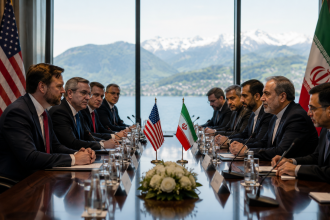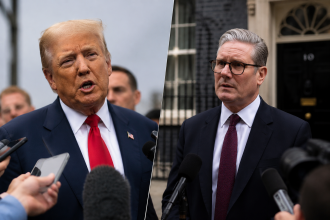

The latest US Iran Talks have brought renewed attention to one of the world’s most closely watched diplomatic relationships. In Switzerland, senior officials from Washington and Tehran gathered for discussions that could influence not only their own countries but also the future of stability across the Middle East.
- Why the Talks Have Captured Global Attention: US Iran Talks
- JD Vance Arrives to Lead the American Delegation: US Iran Talks
- Iran Sends Senior Leaders to Switzerland: US Iran Talks
- The Key Issues on the Agenda: US Iran Talks
- Regional Stability: US Iran Talks
- Iran’s Nuclear Activities: US Iran Talks
- Future Communication: US Iran Talks
- Pakistan and Qatar Play a Supporting Role: US Iran Talks
- Challenges That Could Affect Progress
- What Success Could Look Like
- Global Markets Are Watching Closely
- What Comes Next?
- Final Thoughts
The meeting comes during a period of heightened uncertainty in the region. While major disagreements remain unresolved, the decision to continue talking is being viewed as a positive step by many observers. Diplomatic channels that remain open often create opportunities for solutions that would otherwise be impossible.
With US Vice President JD Vance leading the American delegation and top Iranian officials participating, the talks have become a significant international event that governments around the world are following closely.
Why the Talks Have Captured Global Attention: US Iran Talks
Whenever the United States and Iran sit down for negotiations, the world pays attention.
The relationship between the two countries has been marked by years of political disputes, security concerns, and competing interests. These challenges have often contributed to broader tensions across the Middle East.
Because of this history, even a single meeting can carry enormous significance. The Switzerland discussions are not just about immediate issues. They also represent an opportunity to explore whether a more stable and predictable relationship is possible in the future.
Many international leaders hope that diplomacy can help reduce uncertainty and create conditions that support peace and security.
JD Vance Arrives to Lead the American Delegation: US Iran Talks
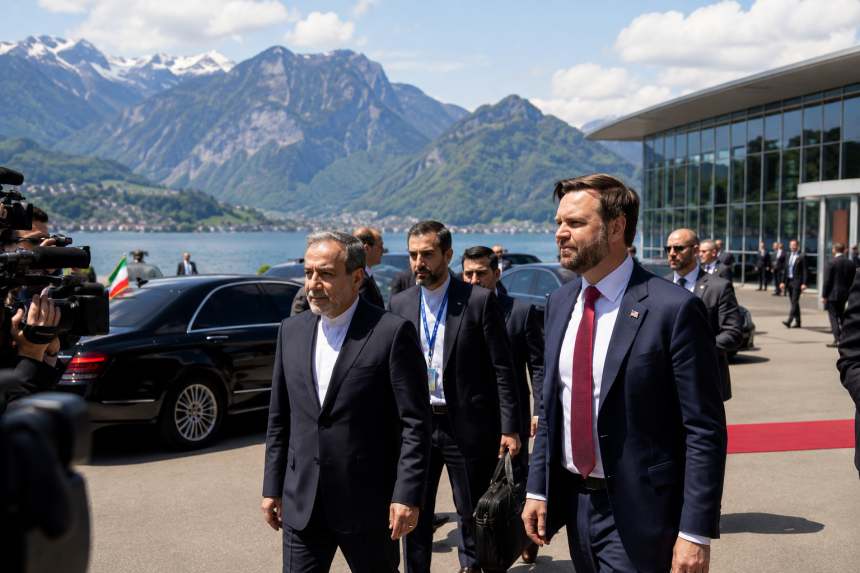
The arrival of JD Vance in Switzerland signaled the importance Washington places on the negotiations.
As vice president, Vance’s participation reflects a high level of engagement from the United States. His presence demonstrates that the administration views the talks as an important opportunity to address critical issues through direct dialogue.
Before discussions began, American officials emphasized the need for practical solutions and long-term stability. Rather than focusing only on short-term outcomes, the goal is to identify pathways that could support future cooperation and reduce tensions over time.
A Careful but Hopeful Approach: US Iran Talks
While optimism exists, expectations remain realistic.
Officials understand that complex disagreements developed over many years cannot be resolved during a single meeting. Instead, success may depend on gradual progress and a willingness to continue engaging even when differences remain.
This cautious approach reflects the challenges that have historically shaped relations between the two countries.
Iran Sends Senior Leaders to Switzerland: US Iran Talks
Iran also demonstrated its commitment to the talks by sending a delegation led by senior government officials.
Among the most prominent participants is Foreign Minister Abbas Araghchi, who has played a key role in diplomatic discussions involving Iran.
The presence of experienced negotiators indicates that Tehran considers the talks important. It also suggests that Iranian leaders see value in maintaining communication channels despite ongoing disagreements.
Iran’s Perspective: US Iran Talks
Iranian officials have repeatedly stated that they seek outcomes that protect national interests while addressing broader regional concerns.
Their position focuses on security, sovereignty, and the need for respectful diplomatic engagement.
Balancing these priorities with American expectations remains one of the central challenges facing negotiators.
The Key Issues on the Agenda: US Iran Talks
Although the talks cover a wide range of topics, several issues have emerged as particularly important.
Regional Stability: US Iran Talks
One of the main goals is reducing tensions across the Middle East.
Conflicts and political uncertainty have affected numerous countries in the region. Leaders understand that instability can have far-reaching consequences, impacting economies, security, and everyday life.
Diplomats are exploring ways to lower risks and encourage a more predictable regional environment.
Iran’s Nuclear Activities: US Iran Talks
The issue of Iran’s nuclear program remains central to discussions.
For years, this topic has been a source of disagreement between Tehran and Washington. American officials continue to seek assurances regarding Iran’s activities, while Iranian representatives emphasize their country’s rights and interests.
Because of its importance, this issue is expected to remain a major focus throughout the negotiations.
Future Communication: US Iran Talks
Beyond immediate concerns, both sides are looking at how future dialogue could be improved.
Effective communication helps prevent misunderstandings and creates opportunities for cooperation. Establishing stronger diplomatic channels could help both countries manage disagreements more effectively in the years ahead.
Pakistan and Qatar Play a Supporting Role: US Iran Talks
An important element of the talks is the involvement of regional mediators.
Pakistan and Qatar have helped facilitate communication between the United States and Iran. Their efforts highlight the role that trusted partners can play in supporting diplomacy during difficult negotiations.
Mediators often provide neutral ground for discussions and help maintain momentum when talks encounter challenges.
Why Mediation Matters: US Iran Talks
History shows that many successful diplomatic agreements rely on third-party assistance.
Countries acting as facilitators can help bridge differences, clarify positions, and encourage constructive dialogue.
In complex negotiations, these contributions can make a meaningful difference.
Challenges That Could Affect Progress
Despite the willingness to talk, negotiators face several significant obstacles.
A Long History of Distrust
Years of disagreements have created deep skepticism on both sides.
Building trust requires more than meetings and statements. It often depends on consistent actions over an extended period.
Because of this reality, many experts believe meaningful progress will take time.
Regional Pressures
The broader political environment also affects the negotiations.
Events occurring elsewhere in the Middle East can influence public opinion, government decisions, and diplomatic priorities.
As a result, negotiators must consider not only bilateral issues but also wider regional dynamics.
What Success Could Look Like
Not every diplomatic breakthrough comes in the form of a major agreement.
Sometimes success is measured through smaller achievements that create momentum for future discussions.
Possible outcomes include:
- Continued diplomatic engagement
- New channels for communication
- Progress on security-related concerns
- Frameworks for future negotiations
- Reduced tensions between the two countries
Even modest gains could help improve the overall atmosphere and support further dialogue.
Global Markets Are Watching Closely
The impact of the talks extends beyond politics.
Financial markets, energy companies, and international investors are paying close attention to developments in Switzerland.
Relations involving Iran have historically influenced energy markets, particularly oil prices. Any signs of progress or increased tension can affect economic expectations around the world.
This explains why the negotiations are attracting such widespread interest from governments and businesses alike.
What Comes Next?
The future of the talks will depend on the willingness of both sides to continue engaging with one another.
If discussions prove productive, additional meetings could follow. Continued negotiations would allow diplomats to build on any progress achieved during the current round.
However, if major differences remain unresolved, further efforts may be required before significant breakthroughs become possible.
Regardless of the immediate outcome, maintaining dialogue remains an important achievement in itself.
Final Thoughts
The latest US Iran Talks in Switzerland represent a significant moment in international diplomacy. With JD Vance leading the American delegation and senior Iranian officials taking part, both countries have demonstrated a willingness to keep communication alive despite longstanding disputes.
Major challenges still stand in the way of a comprehensive agreement. Yet diplomacy often advances through patience, persistence, and gradual progress rather than dramatic breakthroughs.
As negotiations continue, the world will be watching closely to see whether these discussions can reduce tensions and open the door to a more stable future for the region.
Read Other Interesting news here: iTechArtGroup Review