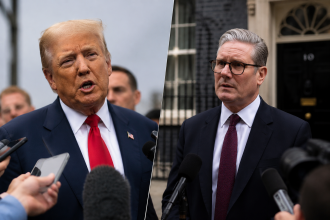


The latest US Iran Peace Talks were supposed to represent a new opportunity for diplomacy in the Middle East. Instead, the negotiations began under the shadow of renewed violence, uncertainty, and growing regional tensions.
- Why the US Iran Peace Talks Are So Important
- Switzerland Once Again Becomes the Center of Diplomacy
- JD Vance Leads the American Delegation
- Iran Sends Senior Officials for Key Discussions
- Lebanon Violence Casts a Shadow Over Negotiations
- Pakistan’s Role in Supporting Diplomacy
- Key Issues Being Discussed
- The Biggest Obstacles Facing the Talks
- What Success Could Look Like
- Why the World Is Watching
- Final Thoughts
As senior American and Iranian officials prepared to meet in Switzerland, events unfolding in Lebanon threatened to complicate an already delicate diplomatic process. Israeli strikes in Lebanon raised concerns among negotiators and observers who feared that fresh military action could undermine efforts to maintain momentum toward peace.
Despite these challenges, the US Iran Peace Talks remain one of the most important diplomatic developments in the region. Governments, investors, and international organizations continue to watch closely, hoping that dialogue can prevent a wider crisis and create a foundation for long-term stability.
Why the US Iran Peace Talks Are So Important
The significance of the US Iran Peace Talks extends far beyond relations between Washington and Tehran.
For years, tensions involving the United States, Iran, Israel, and various regional groups have influenced security conditions across the Middle East. These tensions have also affected global energy markets, international trade routes, and diplomatic relations between major powers.
Because of this interconnected reality, even small developments in the US Iran Peace Talks can have broader consequences. Successful negotiations could help reduce instability, while setbacks could increase uncertainty across the region.
Many international leaders believe diplomacy remains the best path toward avoiding further escalation and creating conditions for sustainable peace.
Switzerland Once Again Becomes the Center of Diplomacy
Switzerland has long been known as a neutral location where difficult diplomatic discussions can take place.
This reputation made it a natural choice for the latest round of US Iran Peace Talks. The country has frequently hosted sensitive international negotiations, providing a secure environment where opposing sides can engage in direct discussions.
The Switzerland meeting was designed to build upon earlier diplomatic efforts and explore ways to strengthen a fragile understanding between the two countries.
For both delegations, the location offered a setting focused on dialogue rather than confrontation.
A Meeting With Global Attention
The talks immediately attracted worldwide interest.
Political leaders, security analysts, and business communities all recognized that the outcome could influence developments far beyond Switzerland.
Every statement, meeting, and diplomatic gesture became closely monitored as observers searched for signs of progress.
JD Vance Leads the American Delegation
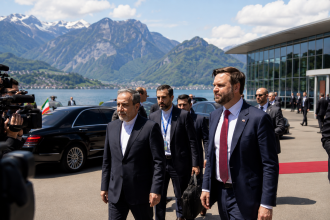
One of the most significant aspects of the negotiations was the participation of US Vice President JD Vance.
His arrival in Switzerland demonstrated the importance Washington attached to the discussions. Sending such a senior official signaled a willingness to engage directly and seriously with Iran despite longstanding disagreements.
American officials emphasized that diplomacy remains an essential tool for reducing tensions and addressing complex regional challenges.
Seeking Practical Results
The United States entered the talks hoping to achieve meaningful progress on several issues.
Rather than focusing only on short-term objectives, negotiators sought solutions that could contribute to longer-term stability and improved communication.
This approach reflects an understanding that sustainable diplomatic success requires patience and persistence.
Iran Sends Senior Officials for Key Discussions
Iran also approached the negotiations with a high-level delegation.
Among the leading representatives was Foreign Minister Abbas Araghchi, who played a central role in discussions involving Tehran’s position and priorities.
The participation of senior Iranian officials highlighted the importance of the talks from Iran’s perspective. It also demonstrated a willingness to continue diplomatic engagement despite ongoing tensions.
Tehran’s Main Priorities
Iran’s leadership continues to focus on protecting national interests while seeking solutions to broader regional challenges.
Officials have consistently emphasized sovereignty, security, and respect in diplomatic relations.
These priorities remain central to Iran’s approach during the US Iran Peace Talks.
Lebanon Violence Casts a Shadow Over Negotiations
Just as diplomatic efforts were gaining momentum, events in Lebanon introduced fresh uncertainty.
Israeli strikes and increased tensions involving Hezbollah created concerns that the broader security environment could deteriorate further.
For negotiators, this development represented a significant challenge. Diplomatic progress often depends on a stable atmosphere, and renewed violence can quickly alter political calculations.
As a result, the situation in Lebanon became an important factor influencing the overall tone of the US Iran Peace Talks.
Risks to Regional Stability
The conflict highlighted how interconnected regional issues have become.
A military escalation in one area can rapidly affect diplomatic efforts elsewhere. This reality makes negotiations involving the Middle East particularly complex.
Leaders participating in the talks understood that addressing broader security concerns was becoming increasingly urgent.
Pakistan’s Role in Supporting Diplomacy
An important but sometimes overlooked aspect of the process is the role played by Pakistan.
Pakistan has been involved in facilitating communication between the United States and Iran during various stages of diplomatic engagement.
Its efforts have helped create opportunities for dialogue at moments when direct communication proved difficult.
Why Mediators Matter
Mediators often play a critical role in international negotiations.
They can help maintain communication, reduce misunderstandings, and encourage constructive discussions even when tensions rise.
In situations as sensitive as the US Iran Peace Talks, trusted intermediaries can make a meaningful difference.
Their involvement helps ensure that diplomatic channels remain open during challenging periods.
Key Issues Being Discussed
The US Iran Peace Talks involve several major topics that have shaped relations between the two countries for years.
Some of the most important issues include:
- Regional security and stability
- Diplomatic relations
- Maritime security
- Economic concerns
- Iran’s nuclear program
- Future communication mechanisms
Each of these topics presents its own challenges and opportunities.
Progress in one area could help build confidence for discussions in other areas.
Maritime Security Remains Important
One issue receiving significant attention involves shipping routes and maritime security.
Recent tensions surrounding strategic waterways have raised concerns among governments and businesses worldwide.
Ensuring safe navigation and stable trade routes remains a priority for many countries involved in regional diplomacy.
The Biggest Obstacles Facing the Talks
Although both sides continue to engage in dialogue, major obstacles remain.
Years of mistrust cannot be erased through a single meeting. Diplomatic progress often requires consistent effort over an extended period.
The challenges facing the US Iran Peace Talks include political disagreements, security concerns, and differing regional priorities.
External Events Can Change Everything
One of the greatest difficulties is that negotiations do not occur in isolation.
Developments elsewhere in the Middle East can rapidly influence diplomatic discussions.
The recent violence in Lebanon serves as a reminder that external events can complicate even the most carefully planned negotiations.
This reality forces diplomats to remain flexible and responsive.
What Success Could Look Like
Success does not necessarily mean a dramatic breakthrough.
In many cases, diplomatic progress happens gradually through a series of smaller achievements.
Possible outcomes from the US Iran Peace Talks include:
- Continued diplomatic engagement.
- Stronger communication channels.
- Reduced regional tensions.
- Greater cooperation on security concerns.
- Frameworks for future negotiations.
Even limited progress could create momentum for additional discussions and help build confidence between the two sides.
Why the World Is Watching
The outcome of the US Iran Peace Talks matters far beyond the Middle East.
Energy markets, international businesses, and governments around the world are paying close attention.
Relations involving Iran have historically influenced global oil prices, trade expectations, and broader geopolitical trends.
This explains why developments in Switzerland continue to attract widespread international interest.
The stakes are high, and the decisions made during these negotiations could have consequences that extend well beyond the negotiating table.
Final Thoughts
The latest US Iran Peace Talks demonstrate both the promise and complexity of diplomacy in today’s Middle East.
While Switzerland provided a neutral setting for important discussions, renewed violence in Lebanon reminded everyone how fragile progress can be. The participation of JD Vance, Abbas Araghchi, and other senior officials shows that both sides recognize the importance of maintaining dialogue despite significant disagreements.
Challenges remain, and no immediate solution should be expected. However, continued engagement offers a better path than confrontation. As negotiations continue, the US Iran Peace Talks will remain a key focus for leaders seeking greater stability, security, and cooperation across the region.
Read Other Interesting news here: US Iran Talks